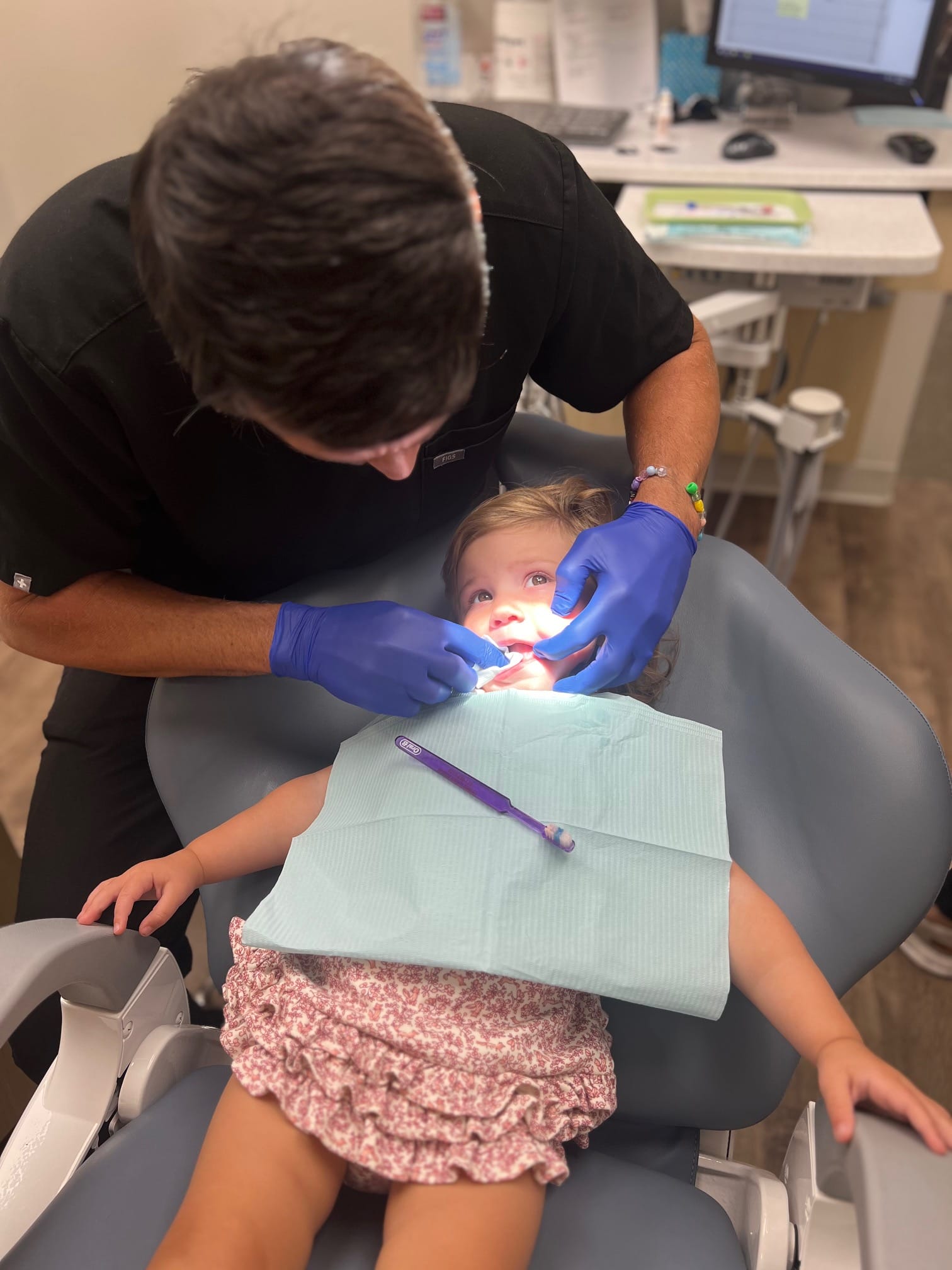
 The American Academy of Pediatric Dentistry recommends all children visit the dentist every six months for an exam and cleaning. We’ll let you know if we recommend more or fewer visits than recommended based on your child’s situation.
This recommended schedule includes babies! Proper care for baby teeth is crucial for:
Baby teeth are vulnerable to tooth decay just like adult teeth. Untreated tooth decay in a child of any age can lead to infection, loss of teeth, and interventions.
In fact, a scientific paper in the Journal of Pediatric Dentistry revealed that children who wait to have their first dental visit until age 2 or 3 are more likely to need restorative or emergency dental visits.
At Hilliard Pediatric Dentistry, an optimal calendar of dental visits for a child with no special needs includes:
At home, dental care during the first year and beyond is also crucial to oral health:
Did you know? Kids lose 20 baby teeth over five to seven years! The first loose tooth usually shows up when they are around 5 or 6 years old, but can happen as late as 8 years old. It may take a few months for the tooth to fall out on its own, but encourage them to keep wiggling it.
Schedule your children’s cleaning and exams for the year today!